Walking into a chippy for the first time can feel like arriving somewhere everyone speaks the language except you. The queue moves quickly, the board above the counter is dense with words, and the person serving is holding a ladle of something you cannot quite identify. The good news is that the vocabulary is small, the rules are forgiving, and almost every combination on that board tastes good. Here is what you actually need to know before you reach the front.
The Two Fish That Do Most of the Work
Most orders come down to cod or haddock, both wrapped in a batter that should shatter rather than bend when you cut into it. They behave differently on the plate, and knowing which you prefer saves a lot of dithering.
Cod
Cod is the milder option. The fillet is usually thicker, the flesh separates into big white flakes, and the flavour stays gentle enough that the batter and chips do much of the talking. If you are not sure you like fish, or you mainly came for the chips, start with cod.
Haddock
Haddock has a slightly sweeter, more pronounced flavour and a finer texture. The fillet can be a shade thinner, so you get a little more batter per bite. If you want to taste the fish itself rather than the coating, haddock is the better first order.
Many shops also list plaice, hake, skate, or a fish cake. Plaice is flat, soft and quick to cook. If you see something you do not recognise, ask whether it is fried to order — that answer tells you a lot about how the shop works.
Decoding the Rest of the Board
Everything else is a side, a sauce, or a regional curiosity. A quick translation:
- Chips: thick-cut and floury, soft in the middle with crisp edges. These are not fries, and asking for thin ones will get you a puzzled look.
- Scraps: the loose, crunchy fragments of batter left in the fryer. Often given free, sometimes called bits or batter bits.
- Mushy peas: dried peas cooked down to a soft, savoury mush. Traditional with haddock.
- Curry sauce: mild, slightly sweet, pourable. Excellent over chips.
- Gravy: more common in the north of England, and a proper chip-shop order in its own right.
- Tartare sauce: cold, creamy, sharp with capers and gherkin. Ask for a tub rather than having it poured on.
- Fish cake: potato and fish, often coated in batter or breadcrumbs. A lighter appetite option.
- Pickled onion or egg: sharp, vinegar-heavy, and either essential or unappealing depending on who you ask.
Names shift by region. In Scotland you may see a "single" or a "supper", and the batter itself is sometimes made with a little more raising agent. Ask the person serving if a term is unfamiliar — nobody minds.
Scraps, Salt and Vinegar
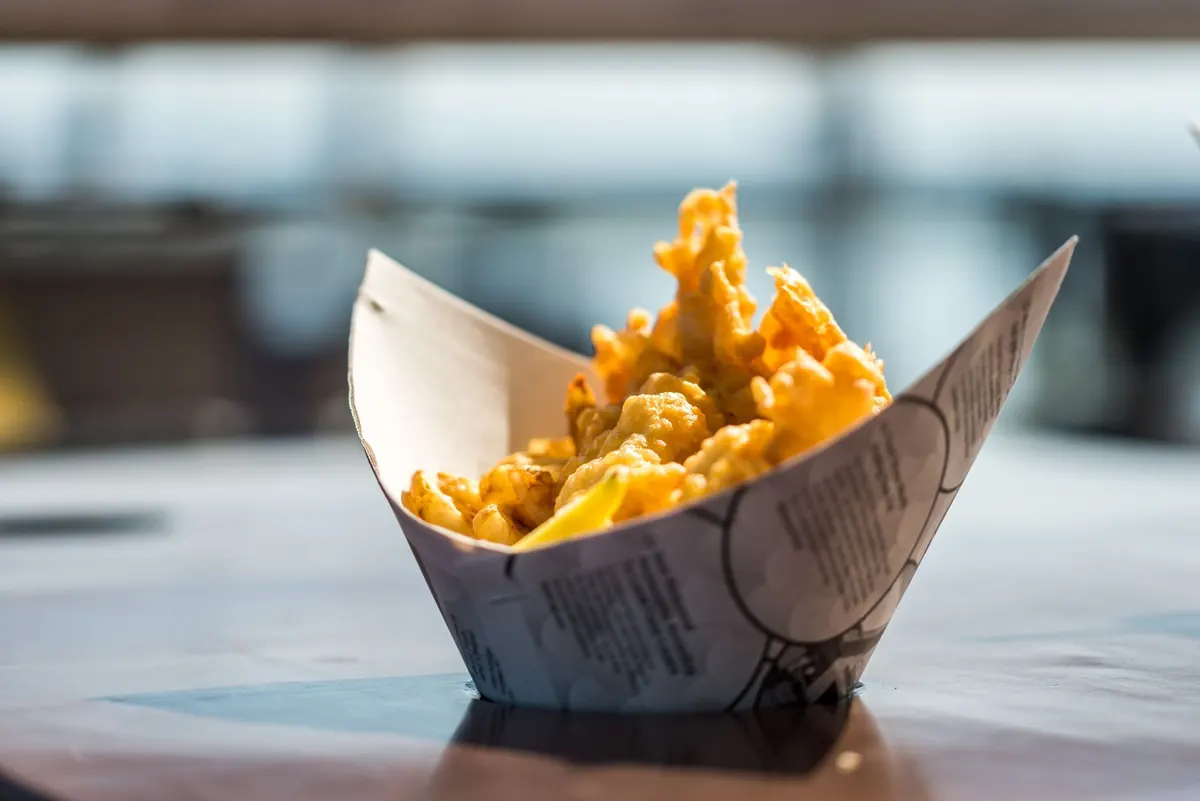
Scraps are the best-value thing in the shop and the thing newcomers most often miss. When your chips come out of the fryer, small curls of cooked batter are left behind. Ask for "a bag of scraps" or "scraps on the chips" and you will usually get them for nothing. Eat them within a few minutes, while they are still crisp; they turn soft quickly.
Salt and vinegar is a single instruction, not two. Say "salt and vinegar on" and the server will shake both over the open paper before wrapping. Vinegar first, then salt, is the usual order of business, because the salt sticks to the wet surface instead of bouncing off.
Two practical points. If you are taking your food home, ask for the vinegar on the side — a fully dressed portion steams inside the paper and the chips lose their edge. And if you are offered a choice, malt vinegar is the traditional one, while the sharper stuff in the plastic bottle is a non-brewed condiment. Both are fine; they taste different.
Portion Sizes Without the Guesswork
Shops vary, but the rough logic holds almost everywhere. A small chips is a snack for one person. A regular is a proper portion for one hungry adult, or a shared side for two. A large feeds two or more, or one person who has skipped lunch. Fish usually comes in one size per type, though many shops offer small and large fillets, and a "mini fish and chips" appears on plenty of lunch menus.
A short method for sizing your order
- Count the people eating, then decide whether chips are the main event or a side.
- If everyone is having fish, order one portion of chips between two people and share.
- Match the fish to the appetite, not the other way round — an extra fillet is easier to add than a surplus of chips is to finish.
- Ask how long a fresh fillet will take. If it is five or ten minutes, wait. It is worth it.
- Order a small portion of chips for children rather than a regular, and expect them to eat half of yours anyway.
Classic Combinations That Always Work
If you want a first order that cannot go far wrong, these are the pairings regulars come back to:
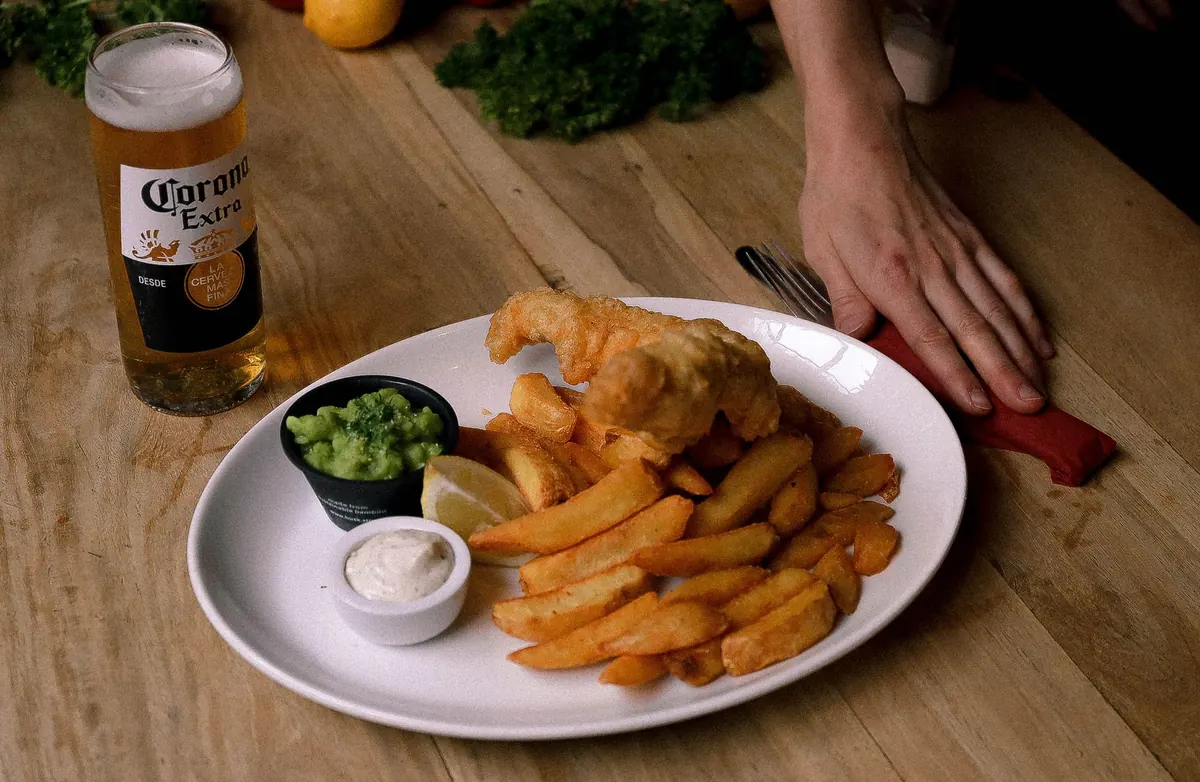
- Cod and chips, salt and vinegar on, tartare on the side. The default order for a reason.
- Haddock, chips and mushy peas. The peas cut through the fried batter nicely.
- Chips with scraps and curry sauce. Cheap, fast, and the best thing to eat on a cold walk home.
- Battered sausage and chips. For anyone who does not want fish at all.
- Fish cake and chips. Lighter, and usually quick to serve.
- Two small portions instead of one large. Better texture, less waste, less sog.
Ordering at the Counter
The rhythm of a busy chippy is simple once you know it. Order the fish first, because it may need frying. Then the chips, then the sides and sauces. Say "salt and vinegar on" if you want it applied, and ask for scraps before the paper is closed. Mention any allergy or dietary need at the start of the order, not after the food is wrapped. Check the bag before you leave the counter, especially if you have ordered several portions. Then get the paper open as soon as you can — trapped steam is the only real enemy of a good bag of chips.
A First Order Worth Trying
One haddock, one regular chips to share, salt and vinegar on, a tub of mushy peas, and scraps if the shop offers them. Eat within ten minutes, keep the paper open while you travel, and decide from there whether you are a cod person or a haddock person.
One sensible note: batter is usually made with wheat flour, and fish and chips share fryers with other coated items, so if you have a gluten allergy or intolerance, tell the staff and ask what is in the batter and how the frying is managed. Shops handle this question often and are used to it. If you are choosing fried food regularly and want to know how it fits into your diet, that is a conversation for a doctor or dietitian rather than the person behind the counter.
Photo: Caio / Pexels