Most arguments about fish and chips begin with the batter. Crisp or soft, beer or water, thick or thin. The chip sits quietly at the side of the plate doing half the work and rarely gets a say.
That is a mistake. The cut decides how the whole meal eats: whether the chips are still crisp by the last forkful, whether a pot of curry sauce has anything to cling to, and whether the plate reads as a proper chippy tea or something closer to a diner basket. Three cuts cover almost everything worth arguing about — chunky, French fry and crinkle — and each one solves a different problem.
Chunky Chips: The Traditional Standard
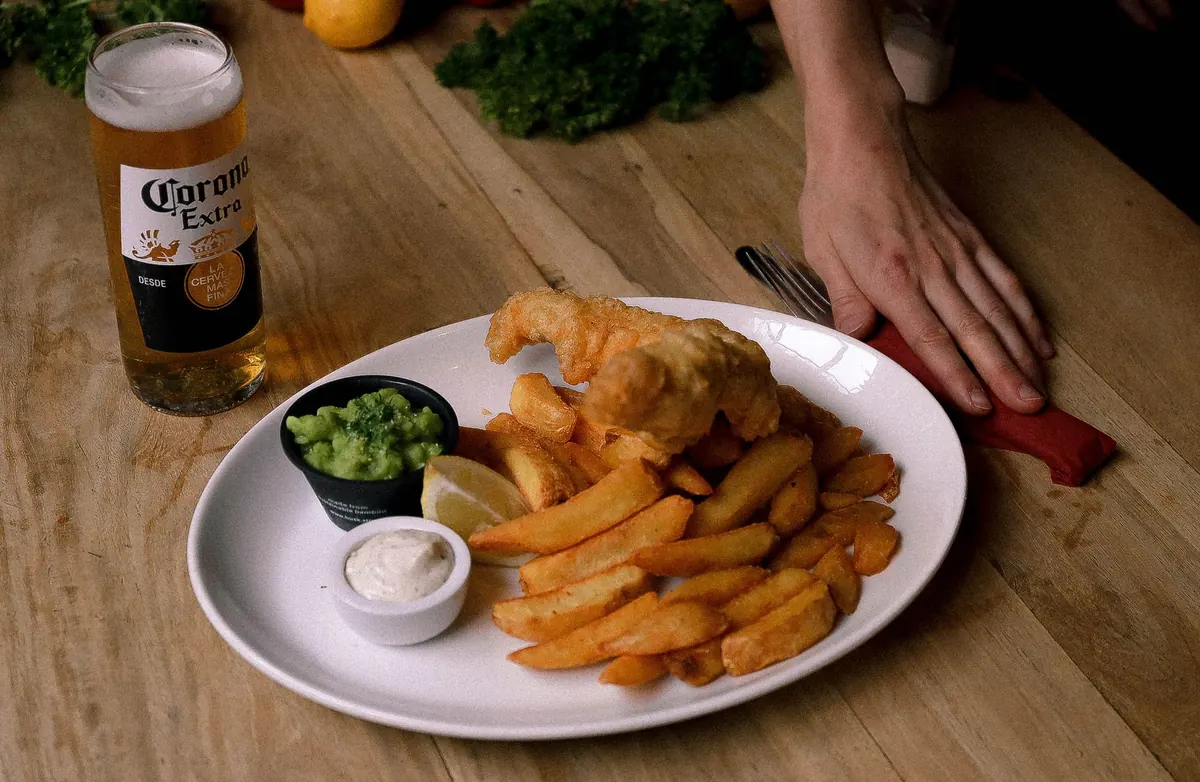
When someone says "chips" in a British chip shop, they usually mean a thick cut: roughly a finger's width, somewhere around 15–20mm, cut from a floury potato such as a Maris Piper, King Edward or Rooster. It is not a precise cut, and that is part of the appeal. You get chips of slightly different sizes in one portion, which means slightly different textures, which means the bag never gets boring.
The cooking matters more than the dimensions. A thick chip needs a gentle first fry — around 130–140°C — long enough to cook the middle through without colouring the outside, then a rest, then a hard finish at 180°C or so to build the shell. Skip that first stage and you get a chip that is dark outside and waxy in the middle, the most common fault in a badly run fryer.
What chunky chips do well
A thick chip holds heat, which matters when you are eating out of paper on a cold evening. It carries salt and vinegar without collapsing. It gives you a crust that shatters, then a fluffy, dry interior that soaks up mushy peas. It also feels like a meal rather than a garnish.
Where chunky chips fall down
Dipping is the weak point. A 2cm chip has a lot of potato and very little surface, so a quick dip in tartare sauce coats maybe a third of the bite. If sauce is central to how you eat, you will use more of it and still taste less of it.
Thick chips also punish bad timing. They need longer in the oil than a thin cut, so a busy service that pulls them early sends out waxy chips, and a boxed portion steams itself soft within minutes. Eat them fast, and eat them hot.
French Fries: Thin, Crisp and Built for Dipping
Fries — roughly 6–8mm — win on surface area. More of the potato sits against hot oil, so more of it becomes crust. Done well, a fry is crisp from end to end with a small, soft centre. Done badly, it is hollow, greasy and limp before the fish hits the plate.
Texture
Thin cuts dry out and crisp quickly, which is why the double-fry method suits them. Blanch, cool, then fry hot. Cooking at home, a first fry at a lower temperature followed by a rest on a rack does most of the work, and freezing the blanched fries first gives an even crisper shell.
Dipping ability
This is where fries pull ahead. A narrow chip dragged through curry sauce comes out properly coated. Short lengths mean more dips per portion and a better sauce-to-potato ratio in every mouthful. For tartare sauce, chip shop curry or a pot of mayonnaise, fries are simply more efficient.
Traditional fit
Less traditional than most people admit. In a classic British chippy, fries read as a different tradition — the diner, the Belgian friterie, the tourist-strip cod and chips. They are not wrong with battered fish, but they change the character of the plate, and some of the soft, heavy comfort of a chip shop supper goes with them.
Crinkle Cut: Ridges, Surface Area and Sauce Grip
Crinkle cut sits between the other two in thickness, usually around 8–10mm, with a wavy profile that multiplies surface area without making the chip thin.
Why the ridges earn their place
- Sauce grip. The grooves hold curry sauce, gravy or vinegar instead of letting it run off onto the paper.
- Seasoning. More surface means more salt, more pepper, more of whatever you shake on.
- Crunch. The ridge edges crisp faster than the flat body, so a good crinkle chip has two textures in one bite.
- Scooping. A ridge edge works a little like a shallow spoon for mushy peas or bean juice.
The catch
More surface area also means more oil. If the fryer is running below temperature, crinkle cuts turn greasy faster than a plain chip, and the ridges hold that oil. Cheap frozen crinkle cuts, cooked straight from the bag, are one of the surest signs of a lazy plate.
Fresh crinkle chips need a rinse in cold water to wash off surface starch, a thorough dry, and the same two-stage fry as a chunky chip. Get that right and they are excellent — arguably the best all-rounder for a saucy supper.
Texture, Dipping and Tradition at a Glance
- Chunky: best texture, best with salt and vinegar, weakest for dipping, most traditional.
- French fries: crispest, best for dipping, least traditional with a classic fish supper, and they lose their edge fastest.
- Crinkle cut: strong sauce grip, good crunch, a compromise on tradition, and unforgiving of oil that is not hot enough.
How to Choose Your Cut
- Start with the potato. Floury varieties — Maris Piper, King Edward, Rooster — fluff up inside. Waxy potatoes hold their shape but stay dense.
- Decide whether sauce is the point. Serving curry sauce or tartare? Go thinner. Vinegar only? Go thick.
- Match the cut to the time you have. Thick chips need a long blanch; fries need a hot, fast finish.
- Think about how it is served. Paper and a walk home suits thick chips. A plate with a pot of sauce suits fries or crinkle.
- Salt immediately after the fryer, while the oil is still on the surface, and serve within a couple of minutes.
The Verdict for a Proper Chippy Plate
For a classic British fish supper, chunky chips are still the right answer. They suit the fish, the vinegar, the mushy peas and the whole unhurried ritual of eating out of paper. If your plate is built around dipping — curry sauce, tartare, a pot of mayonnaise — fries or crinkle cut will do a better job, and crinkle is the smarter middle ground: enough thickness to feel like a chip, enough ridge to hold sauce.
Whichever you pick, the cut is only half the story. Fresh potatoes, a properly heated fryer, a two-stage cook and salt at the right moment will beat a fancy shape every time. Fried food is a treat rather than a daily habit, so enjoy it as one; if you have dietary concerns, a doctor or dietitian is the person to ask. Otherwise, get the oil hot and eat them while they are still crisp.
Photo: khezez / خزاز